2026 Self-Storage Build Cost Guide
What it actually costs to build self-storage in the Mountain West, the line items that move the number, and how to read a contractor bid so closeout holds no surprises.
- $70–$110
- All-in per rentable SF, single-story drive-up
- 35%
- Spread two identical facilities hit on bid day
- 6–9 mo
- Groundbreaking to certificate of occupancy
What it costs, before we complicate it
For owners and developers asking what it costs to build self-storage today: the all-in number for a single-story drive-up usually lands between $70 and $110 per rentable square foot in the Mountain West. Multi-story and climate-controlled run higher.
Self-storage cost depends on far more than square footage. Two facilities of identical size in the same state, finished to the same level, regularly land 35% apart on bid day. The spread is driven by site work, building type, door count, and structural design, not by the sticker price of steel.
These ranges reflect 2026 conditions. Steel and labor pricing move quickly, particularly under the current tariff environment, so treat every number in this guide as a planning range, not a quote. Once a real site and a real plan are on paper, the cost tightens considerably.
Price per rentable foot, by format
Self-storage is priced per rentable square foot, never per gross. Drive aisles, walls, and hallways are gross-square-foot costs that the rentable space has to absorb. A facility with weak space efficiency looks reasonable per gross and miserable per rentable. Compare on rentable, every time.
Shell pricing covers the building, slab, and roll-up doors. All-in layers site work, utilities, soft costs, and FF&E on top. Land is separate.
| Format | Shell $/RSF | All-in $/RSF | Build time |
|---|---|---|---|
| Single-story drive-up | $30–$55 | $70–$110 | 6–9 months |
| Multi-story interior corridor | $65–$110 | $100–$180 | 9–14 months |
| Climate-controlled (added to base) | +$15–$30 | +$15–$30 | no added time |
| Boat & RV enclosed | $40–$75 | site-driven | 6–9 months |
| Boat & RV canopy or covered | $18–$35 | site-driven | 4–6 months |
Wasatch Front lower elevations (30 to 40 psf snow load) anchor the low end. Wasatch Back, Park City, and Eastern Idaho mountain markets (80 to 120 psf) run 10 to 20 percent over that baseline for the same building. Coastal and union markets routinely run 20 to 40 percent higher.
A directional dollar figure for your size
Per-square-foot ranges set the bounds, but most owners want a dollar figure for a facility of a specific size. The numbers below cover the building shell, doors, and slab. Add roughly 30% to 60% on top for site work, utilities, soft costs, and FF&E to reach all-in project cost.
| Facility size | Shell & doors | All-in project |
|---|---|---|
| 5,000 RSF single-story | $150k–$275k | $350k–$700k |
| 10,000 RSF single-story | $300k–$550k | $700k–$1.4M |
| 25,000 RSF single-story | $750k–$1.4M | $1.8M–$3.5M |
| 50,000 RSF single-story | $1.5M–$2.75M | $3.5M–$7M |
| 50,000 RSF multi-story | $3.25M–$5.5M | $5M–$9M |
| 100,000 RSF multi-story | $6.5M–$11M | $10M–$18M |
What a "$45 a foot" number does not include
The building shell is one slice of the picture, and first-time owners regularly run short on capital because they treated the building bid as the project bid. They are different documents. These are the buckets a shell quote leaves out.
- Land
- Acquisition, holding cost, financing, and due diligence (geotech, survey, Phase I).
- Site work
- Earthwork, retaining, paving, storm drainage, landscaping. Often $8 to $25 per gross SF of building. A bad site can run past $40.
- Utilities
- Power, water, sewer, fiber. Extensions on otherwise comparable sites have run from $40,000 to over $500,000 in our experience.
- Soft costs
- Architectural and civil engineering, permit and impact fees, legal, financing, project management. Typically 8% to 15% of hard costs.
- FF&E and tech
- Office buildout, gates, cameras, access control, kiosks, signage. $3 to $10 per rentable SF.
- Contingency
- Carry 5% to 10%. If the site has unknowns (fill, water table, rock), carry 10% or more.
Why identical plans bid 30% apart
Two projects that look identical on paper still bid far apart. These are the biggest swing factors, in roughly the order they show up.
- Site conditions
- Cut and fill, rock excavation, high water table, fill, retaining heights. Site alone is a $5 to $20 per SF swing.
- Snow and wind load
- A 100 psf snow-load building uses substantially more steel than a 30 psf one. Mountain markets pay for it directly in the steel package.
- Seismic category
- Categories D, E, and F demand heavier connections, more bracing, stricter inspection. That covers most of the Wasatch Front and the Eastern Idaho fault zones.
- Door count
- Roll-up doors run roughly $400 to $900 each installed. Smaller average unit size means more doors per SF, which raises the per-rentable cost.
- Hallway width
- A 5-foot interior hallway versus a 6-foot one swings rentable efficiency by 4% to 6%, and that compounds for the life of the asset.
- Finish level
- Stucco vs. metal panel, glass storefront vs. punched windows, parapets and articulation. Easily $3 to $12 per gross SF before you notice it.
The site sets the ceiling on everything
Most storage projects that struggle in lease-up were not damaged at construction. They were damaged at site selection. No amount of capital, branding, or operational discipline builds you out of a bad site. Run this before earnest money goes hard.
- Trade-area supply
- National average is 7 to 8 net rentable SF per capita. Above 9 is typically saturated, below 5 is generally underserved. Pull a 3-mile and 5-mile radius.
- Pipeline supply
- Check city and county planning for permitted but unbuilt facilities. New supply landing three months after you open is worse than competition you already priced in.
- Visibility and access
- 15,000+ AADT on the primary frontage is preferred. Full-movement access beats right-in, right-out.
- Soil and utilities
- Geotech report before closing. Confirm power, water, sewer, and fiber at the lot line, extensions can run $50,000 to over $500,000.
- Zoning
- Self-storage zoning has tightened. Several jurisdictions added moratoria or conditional-use requirements between 2024 and 2026. Confirm before purchase.
Make the estimate defensible
Insist on bids broken out by category, never as one lump sum. A line-itemed bid lets you compare two contractors apples to apples and gives you something to renegotiate when the all-in number runs high. Require these.
- Steel and erection
- Broken out from foundation and slab.
- Site work
- Broken out from the building.
- Doors
- Counted separately with the door schedule attached.
- Allowances
- Called out: paving thickness, concrete strength, finish materials.
- Exclusions
- In writing. What is NOT in this bid.
- Schedule
- Milestone dates for steel arrival, foundation pour, dry-in, and substantial completion.
A bid that comes in 10% under everyone else should worry you, not excite you. It usually means a scope gap that surfaces as a change order after the contract is signed.
Every number here comes from facilities we built
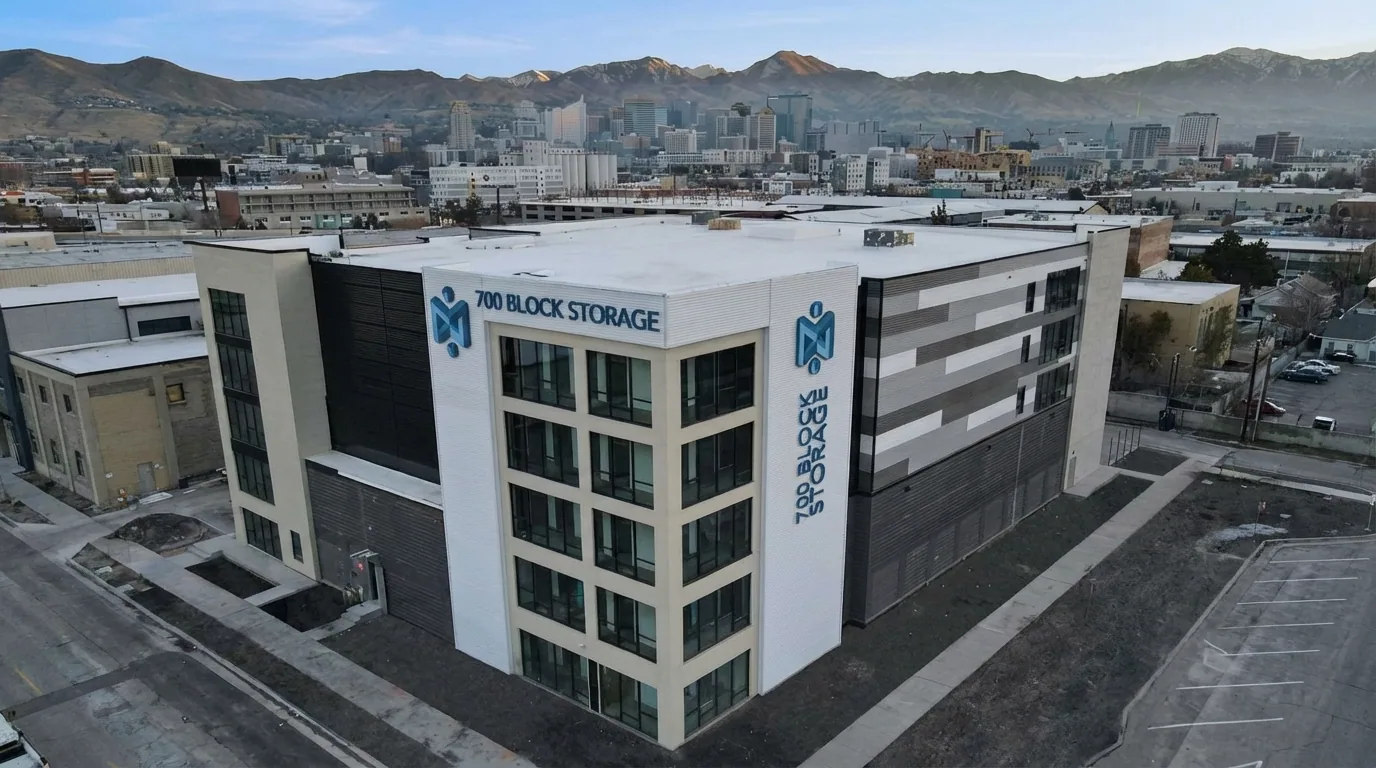
700 Block Storage
Salt Lake City, UT
- ~70,000 SF net rentable
- 500+ units
- Multi-story climate-controlled
- Seismic Category D
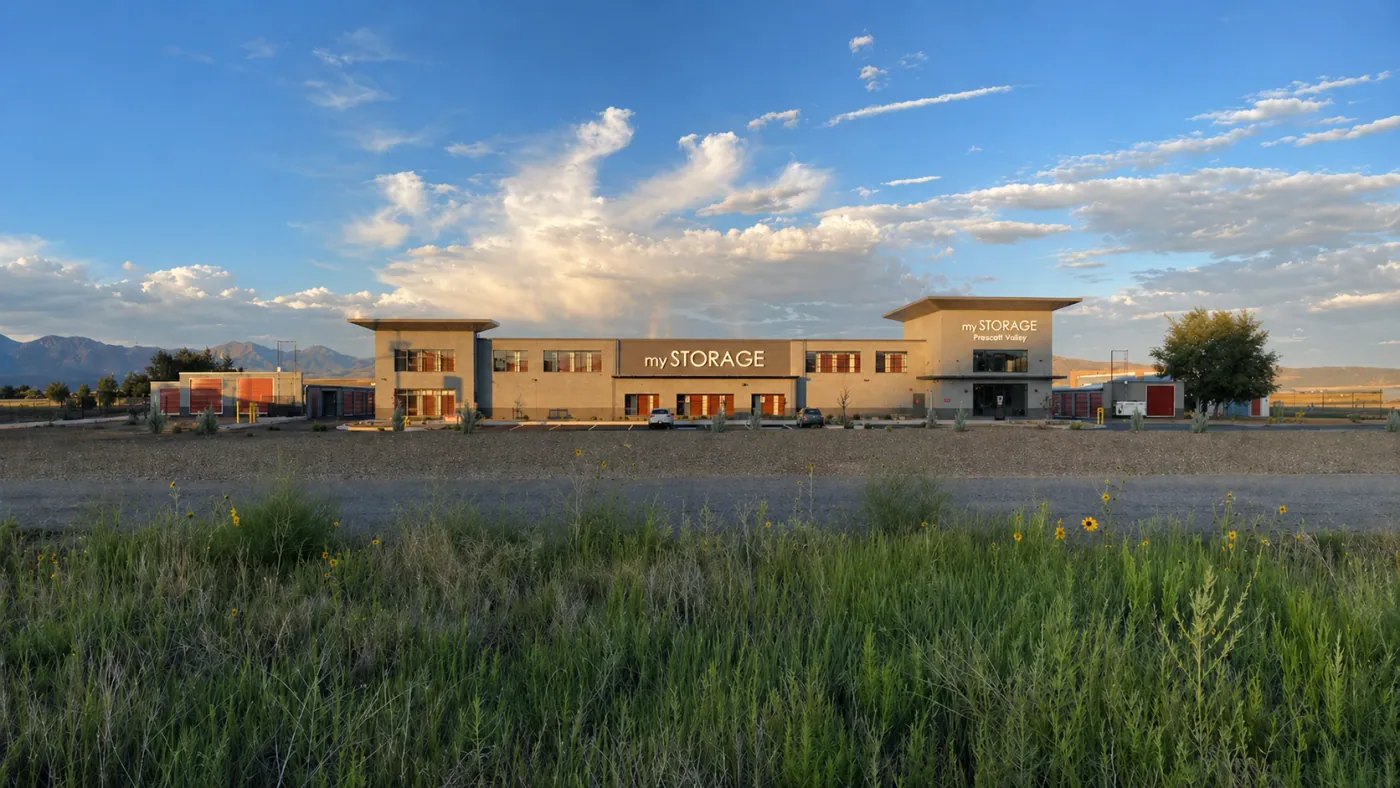
My Storage Prescott Valley
Prescott Valley, AZ
- Climate-controlled interior
- Drive-up access
- Oversized RV & boat doors
- Branded storefront
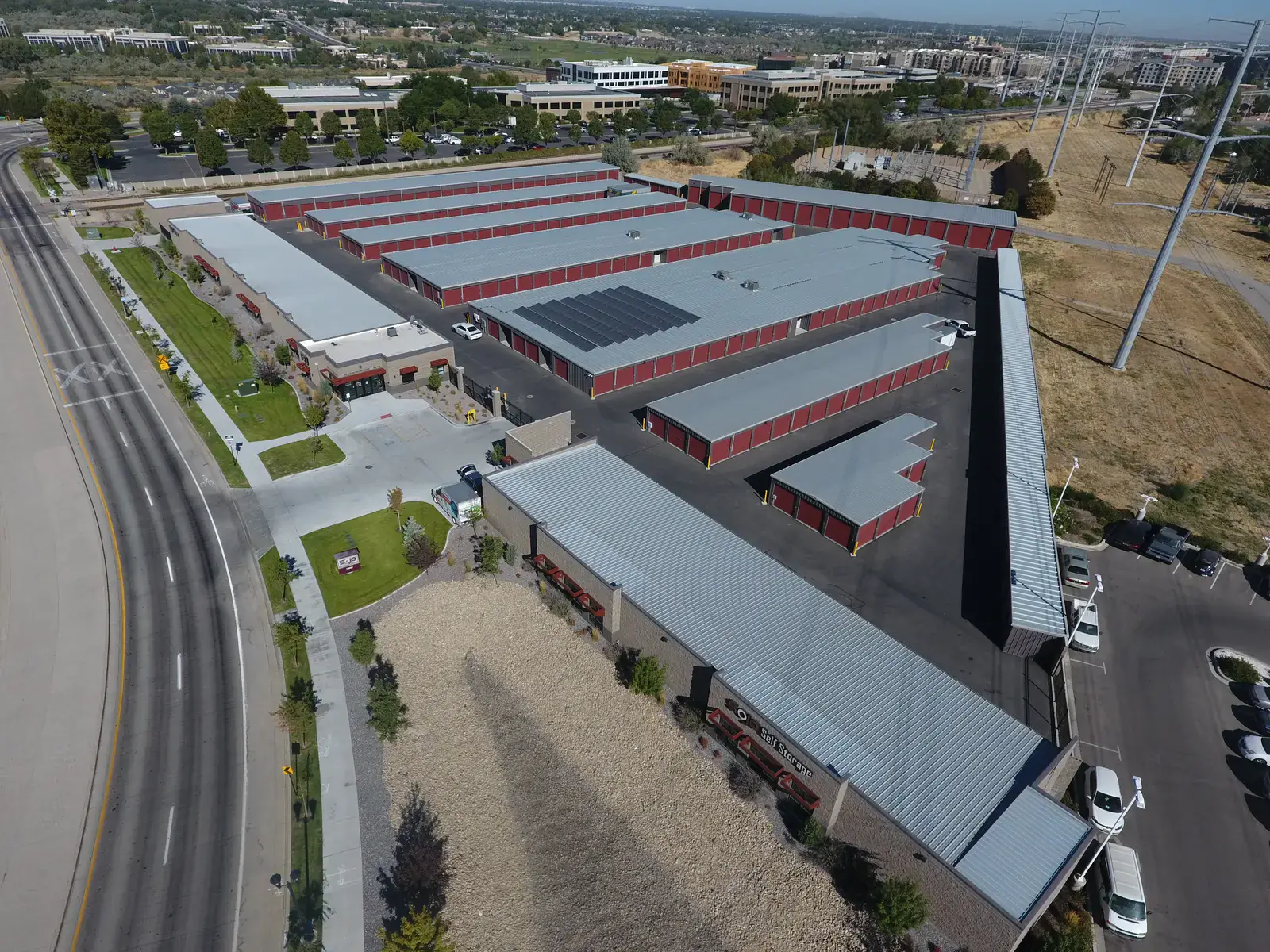
Sojo Storage
South Jordan, UT
- Drive-up self-storage
- Wasatch Front build
- Design-build delivery
Put real numbers to your site
This guide gives you the planning ranges. A real bid needs a real site. Send us the parcel and the format you have in mind and we will put line-item figures to it, the same way we priced every project in this guide.
Get a real estimate